Interesting things from Mitsubishi Heavy Industries air conditioning corporation

Mitsubishi Heavy Duty AirCon Việt Nam
30-08-2024 Copy link


When talking about high-end Japanese air conditioners, we cannot fail to mention Mitsubishi Heavy air conditioners - one of the giants in this extremely vibrant and competitive market. Having been present in Vietnam for more than 10 years and participating in many projects such as houses, commercial areas, luxury apartments... without much communication but still quietly developing thanks to its quality and durability over the years.
Along with the development of Mitsubishi Heavy Industries (MHI) for more than 134 years, Mitsubishi Heavy air conditioners have also had ups and downs throughout MHI's history. Let's learn about the interesting things about Mitsubishi Heavy air conditioners.
Mitsubishi Heavy Industries started out as a shipbuilding company
Mitsubishi was a shipping company founded by Yataro Iwasaki in 1870. In 1873, the company name was changed to Mitsubishi Shokai (三菱商会: Sanling Merchants Association) and it began to diversify its business into shipbuilding, insurance, stevedoring, and trading. Mitsubishi also entered other fields such as papermaking, steel, glass, electronics, aircraft carriers, oil exploration, and real estate.
In 1884, Yataro Iwasaki, the founder of Mitsubishi, leased the government-owned Nagasaki Shipyard. He named the company Nagasaki Shipyard & Machinery Works, and began large-scale shipbuilding. The shipbuilding enterprise was later renamed Mitsubishi Heavy Industries, Ltd. (Mitsubishi Heavy Industries) and became the largest private company in Japan, manufacturing ships, heavy machinery, aircraft, and rail cars.
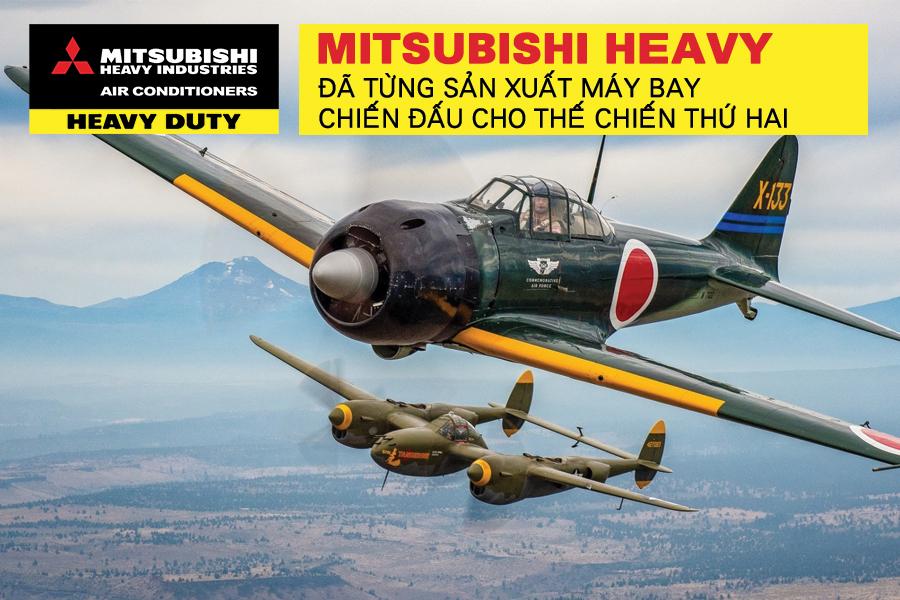
Mitsubishi Heavy Industries produced fighter planes for World War II
During World War II, Mitsubishi produced aircraft carriers and fighter planes, under the direction of aeronautical engineer Jiro Horikoshi. The Mitsubishi Zero was the main carrier-based fighter. It was used by pilots of the Imperial Japanese Navy in the attack on Pearl Harbor on December 7, 1941, and on many other occasions, including in kamikaze attacks.
After the end of World War II, the law to dismantle the "zaibatsu" came into effect, many large corporations that concentrated economic power were dismantled, and Nagasaki Shipyard & Machinery Works was also affected. As a result, in 1950, MHI was divided into three companies: West Japan Heavy-Industries, Central Japan Heavy-Industries, and East Japan Heavy-Industries. In 1964, these companies were merged and re-established as Mitsubishi Heavy Industries, Ltd.
Mitsubishi Heavy Industries consists of several large companies
Due to its diversification, Mitsubishi Heavy Industries, consists of three industrial companies:
• Mitsubishi Motors, Japan's sixth largest automobile manufacturer.
• Mitsubishi Atomic Industry, an atomic energy company.
• Mitsubishi Chemical Holdings, Japan's largest chemical company.
Mitsubishi Heavy Industries Logo
The "Three Diamonds" is the MHI corporate logo, derived from the flag symbol that its predecessor, Tsukumo Shokai, adopted when it started its shipping business. The symbol is a modified version of the family crest of Yataro Iwasaki, the founder of Mitsubishi.
MHI has come a long way in integrating the management and technical strengths of its companies, while enhancing its competitiveness in both domestic and international markets.
Mitsubishi Heavy Duty AirCon Việt Nam
30-08-2024
Copy link
CÁC BÀI VIẾT LIÊN QUAN
Danh mục bài viết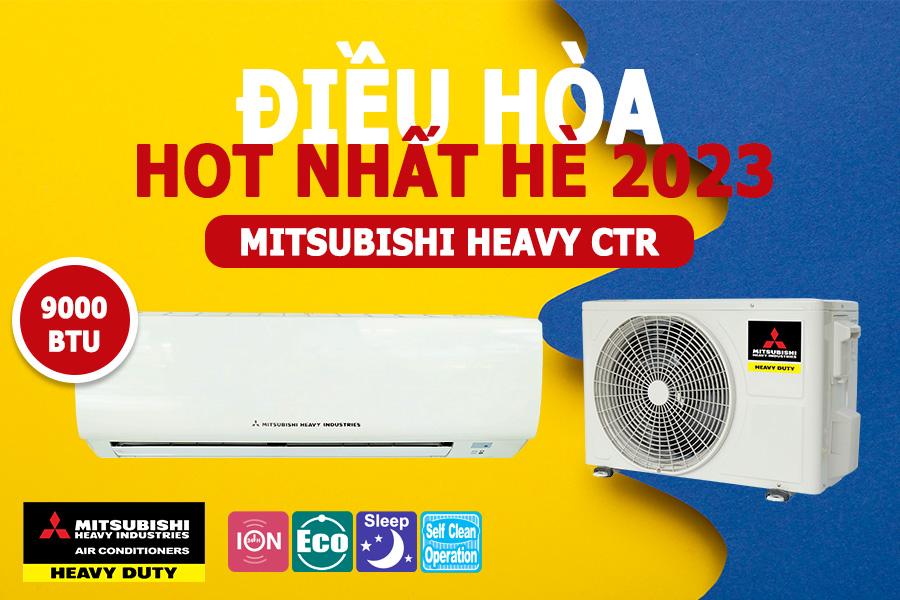
MITSUBISHI HEAVY CTR AIR CONDITIONER 1-WAY NON-INVERTER HOTTEST SUMMER 2023
Mitsubishi Heavy CTR air conditioner is a standard wall-mounted air conditioner line that does not integrate inverter technology and uses R410A gas. The advantage of the product is that it is a mid-range air conditioner with an extremely low price but still ensures the outstanding features of the Mitsubishi Heavy brand: durability, strong cooling capacity and energy saving.
Mitsubishi Heavy Duty AirCon Việt Nam
06-08-2024
MITSUBISHI HEAVY ZRS 2-WAY MULTI-CONNECTION AIR CONDITIONER
Mitsubishi Heavy ZRS 2-way super high-end air conditioner line with combined cooling and heating function, suitable for places with seasonal climate changes from hot to cold like the North. This is a new product launched in 2022 with many convenient features and can be used with the MULTI system.
Mitsubishi Heavy Duty AirCon Việt Nam
06-08-2024
EASE THE BURDEN OF ELECTRICITY BILLS WITH MITSUBISHI HEAVY YXP AIR CONDITIONER
At the end of the year, everyone is busy worrying about how many expenses they have to pay, one of the expenses that accounts for a large proportion of daily life is electricity. Therefore, using electrical appliances intelligently not only helps bring convenience and comfort but also saves electricity costs for consumers.
Mitsubishi Heavy Duty AirCon Việt Nam
06-08-2024